






Description
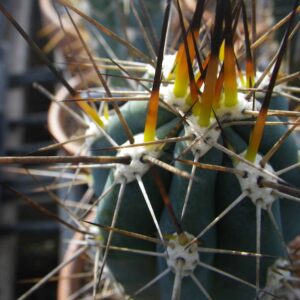
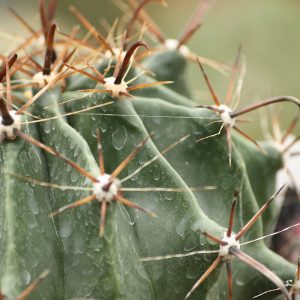
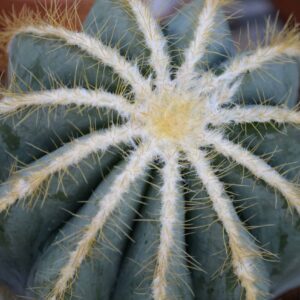
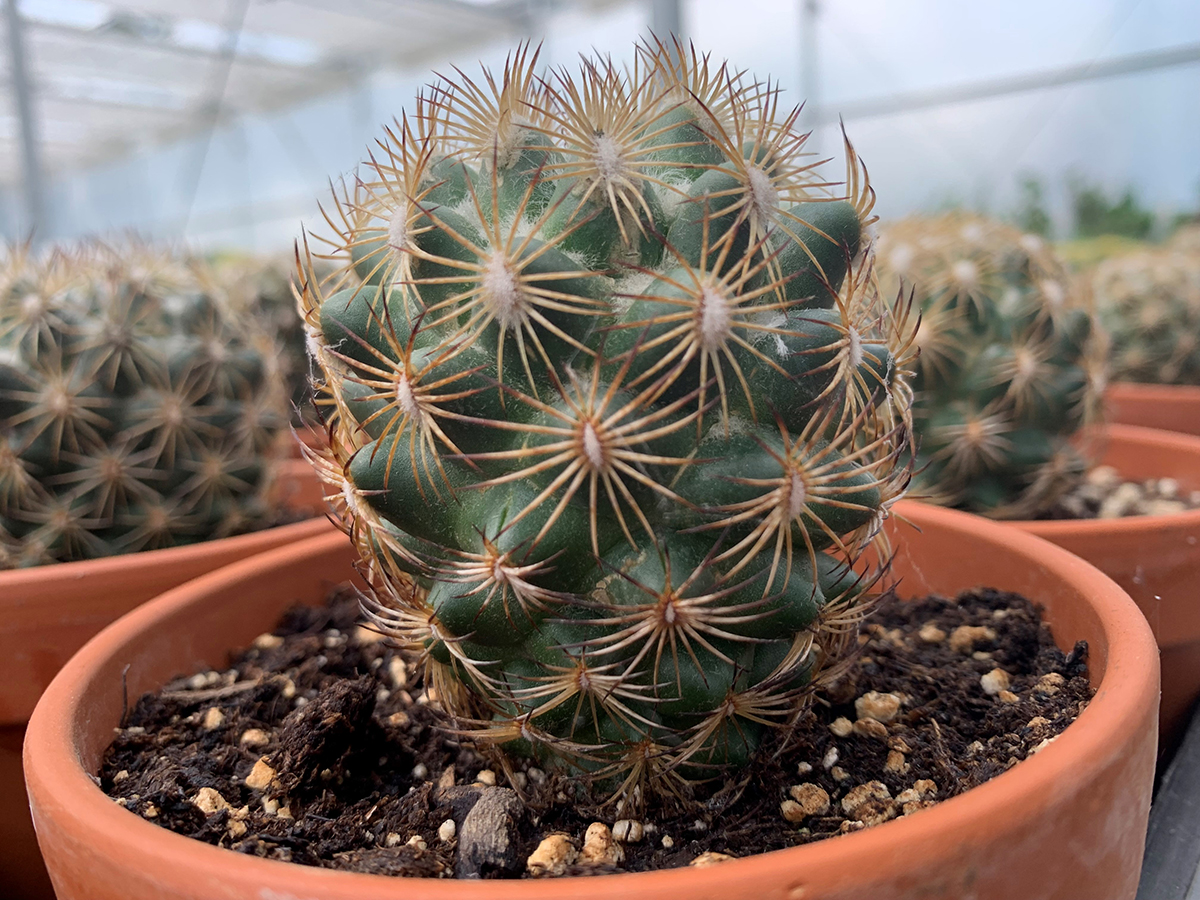
The genus Coryphantha originates from the arid and semi-arid regions of North America, mainly in Mexico and the southwestern United States. This genus of cactus is adapted to hot and dry conditions in its natural habitat, often found on rocky and well-drained soils. Coryphantha is closely related to Mammillaria, but can be distinguished by its unique flower structure.
Light
Coryphantha prefers full sun. Make sure it receives at least 6 hours of direct light per day for optimal growth.
Watering
Like most cacti, Coryphantha requires little water. Water moderately during the growing season (spring and summer), allowing the soil to dry out completely between waterings. In autumn and winter, greatly reduce watering or stop it entirely.
Soil
Use a well-draining cactus potting mix. Good drainage is essential to prevent root rot. You can add sand or perlite to improve drainage.
Temperature
Coryphantha tolerates heat well and prefers temperatures between 20–30°C (68–86°F) during the growing season. In winter, it can tolerate cooler temperatures, but it is best to keep it above 5°C (41°F).
Humidity
This cactus prefers a dry environment. Avoid excess humidity, which can cause fungal diseases. Make sure there is good air circulation around the plant.
Fertilization
Fertilize lightly once a month during the growing season with a cactus-specific fertilizer. Avoid fertilizing in autumn and winter.
Pruning and Repotting
Repot Coryphantha every two to three years in spring. Use a slightly larger pot with good drainage. Prune only to remove dead or damaged parts.
Precautions
Do not overwater Coryphantha. Excess moisture can lead to root rot — a common cause of death for these cacti. Ensure the pot has drainage holes and allow the soil to dry out completely. Watch for fungal issues in high humidity and for pests like mealybugs and aphids. Treat with appropriate insecticides or natural solutions if needed.