






Description
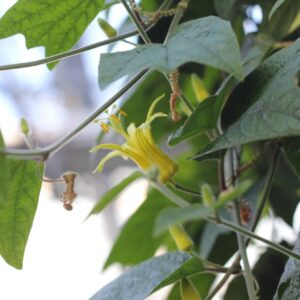
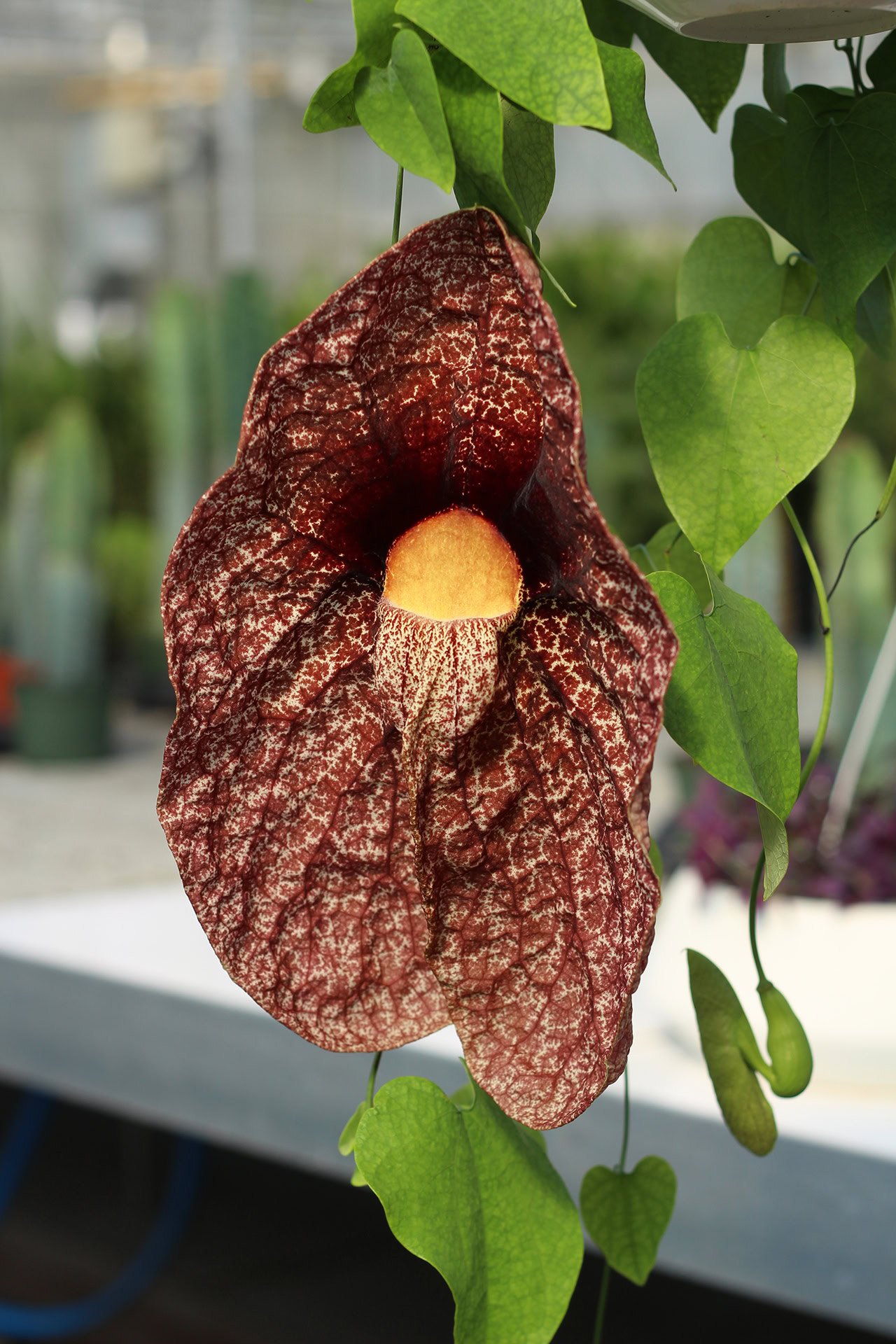
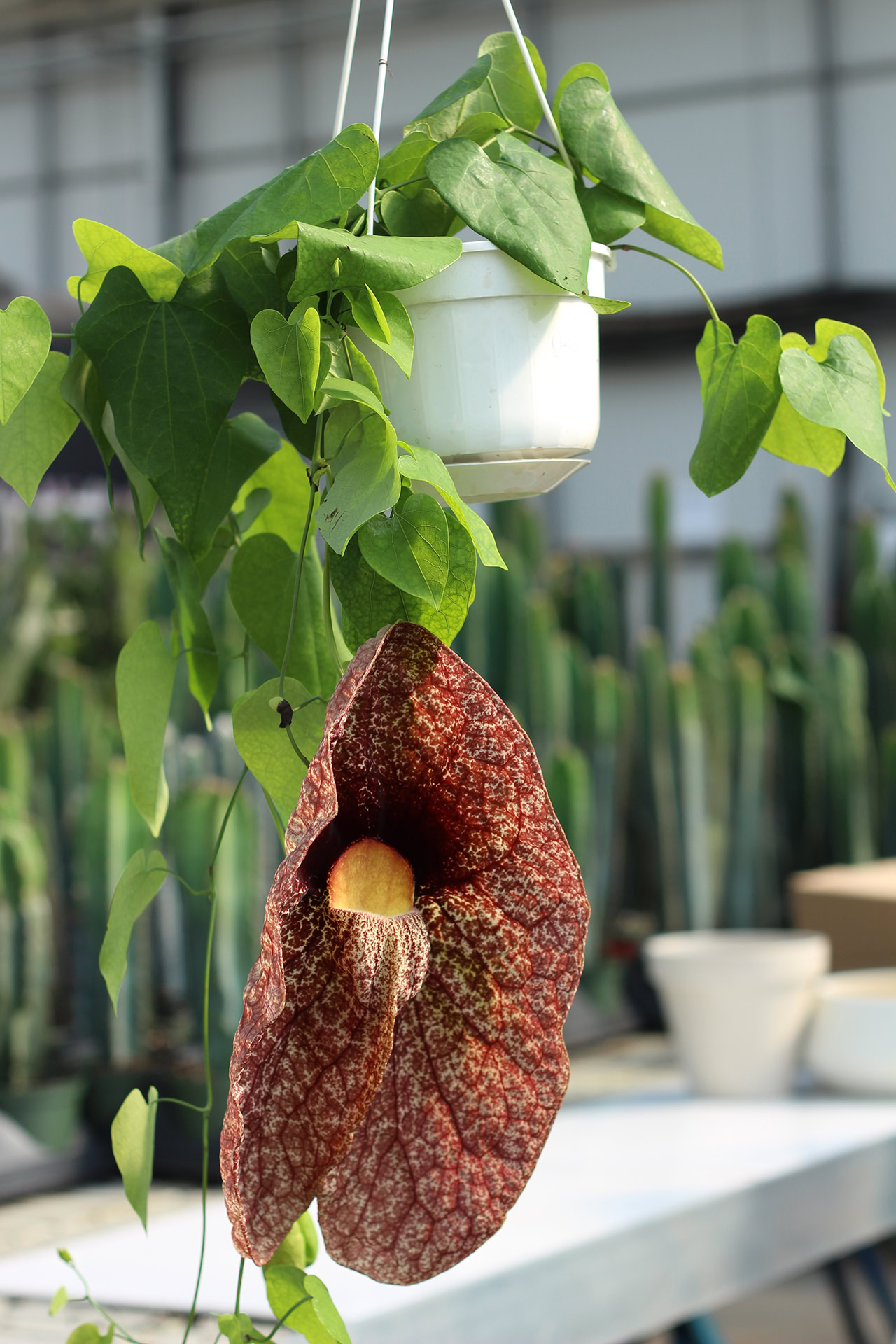
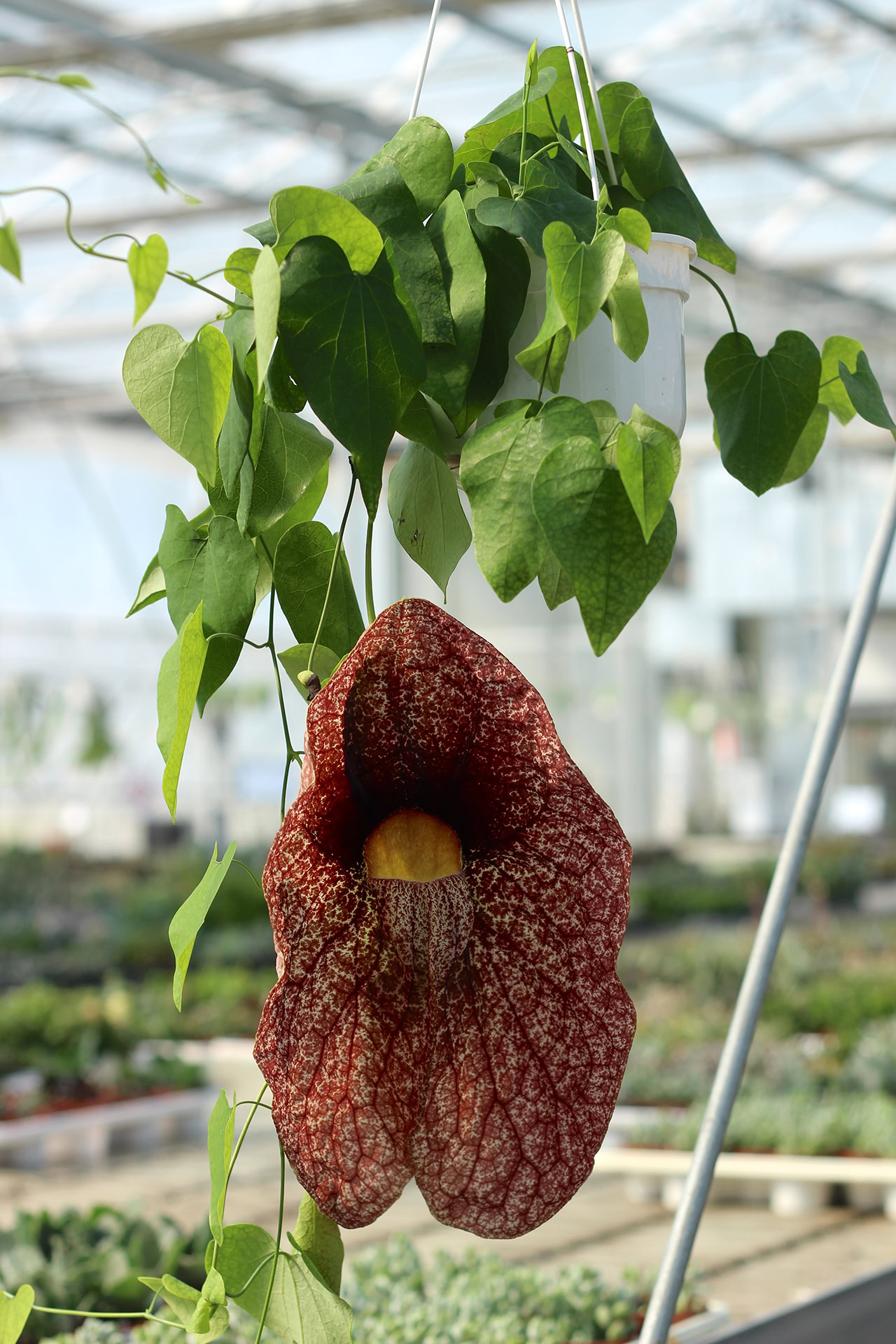
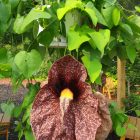
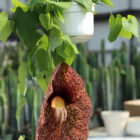
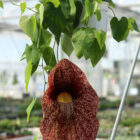
Aristolochia gigantea, also known as the “Brazilian Dutchman’s Pipe” or “Giant Pipe Vine,” is an ornamental climbing plant famous for its large, pipe-shaped flowers. Native to Brazil, this species is prized for its unique floral features and lush foliage.
Here are some care tips:
Light:
Aristolochia gigantea prefers bright but indirect light. It can tolerate some direct sunlight, but too much intense light may scorch the leaves and reduce flowering. Indoors, place it near a bright window.
Watering
Water regularly to keep the soil slightly moist, but avoid waterlogging. In summer, you may need to water more often due to faster evaporation. In winter, reduce watering frequency but ensure the soil doesn’t dry out completely. Good drainage is essential to prevent root rot.
Temperature and Humidity
Aristolochia gigantea prefers moderate to warm temperatures, between 18°C and 27°C (64–80°F). It does not tolerate temperatures below 10°C (50°F), so it should be protected from the cold. This plant enjoys high humidity; regular misting or the use of a humidifier can be beneficial, especially in dry indoor conditions during winter.
Soil and Fertilization
Use a rich, well-draining potting mix, such as a standard houseplant mix blended with sand or perlite. Fertilize every two to four weeks during the growing season (spring and summer) with a balanced fertilizer diluted to half strength. In autumn and winter, reduce or stop fertilizing.
Pruning and Propagation
Aristolochia gigantea can be pruned to control its growth and maintain a compact shape. Pruning is best done in spring, before the growing season begins. For propagation, use stem cuttings. Take a 10–15 cm cutting, remove the lower leaves, and plant it in moist soil until roots develop.
Common Problems
Aristolochia gigantea is generally pest-resistant, though it can occasionally be affected by aphids, mealybugs, or spider mites. Inspect the plant regularly and treat infestations with suitable insecticides or natural methods such as neem oil. Leaves may turn yellow if the plant receives too much or too little water, or if light levels are inadequate. Adjust care accordingly.