






Description
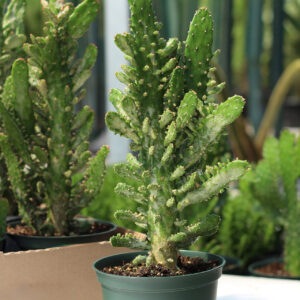
Opuntia rufida ‘Minima Monstrose’ is a compact, contorted variety of the Opuntia genus, commonly known as the prickly pear cactus or bunny ear cactus. This plant originates from the arid regions of Mexico and the southern United States, where it has adapted to desert conditions. The ‘Minima Monstrose’ variety is prized for its unique shape and small size, making it a favorite among cactus collectors and succulent enthusiasts.
Here are some care tips to keep it thriving:
Light
This cactus prefers bright, direct sunlight. Indoors, place it near a sunny window where it can receive several hours of direct light each day. Outdoors, it thrives in full sun or any well-lit location.
Watering
Water moderately during the growing season (spring and summer), allowing the soil to dry out completely between waterings. In fall and winter, reduce watering significantly — only water once the soil is fully dry. Overwatering can lead to root rot.
Soil
Use a well-draining cactus and succulent mix. You can add sand or perlite to improve drainage and prevent water from accumulating at the roots.
Temperature
Opuntia rufida ‘Minima Monstrose’ prefers temperatures between 18–30°C (65–86°F) during the growing season. It can tolerate cooler conditions down to 10°C (50°F) but must be protected from frost and temperatures below 5°C (41°F).
Humidity
This plant prefers a dry environment. Avoid high humidity, which can promote fungal diseases. Dry air is usually well tolerated.
Fertilization
Fertilize lightly during the growing season (spring and summer) using a specialized cactus fertilizer about once a month. Avoid fertilizing in fall and winter when the plant is dormant.
Pruning and Repotting
Remove any dead or damaged pads to maintain a clean appearance. Repot every 2–3 years, or when the plant outgrows its pot, using a slightly larger container with a well-draining soil mix.
Precautions
Avoid overwatering, as this can cause root or stem rot. Make sure the pot has drainage holes and that the soil dries completely between waterings. Watch for signs of root rot, especially if humidity is high. Mealybugs and spider mites may occasionally attack the plant — treat infestations with appropriate insecticides or natural remedies.