




Description
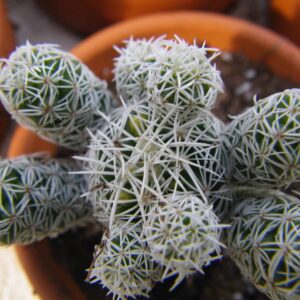
Mammillaria spinosissima, commonly known as “Un Pico” due to its long central spines, is native to the arid and semi-arid regions of Mexico. It often grows singly but eventually produces offsets, forming an attractive cluster around the main stem. Its most notable feature is its ability to survive long periods of drought by storing water in its body to endure dry spells. With its cylindrical shape and pink to reddish crown-shaped flowers near the top, this species is highly appreciated by cactus collectors for its striking appearance.
To keep your Mammillaria spinosissima healthy and thriving, here are some care tips:
Light
Mammillaria spinosissima prefers full sun exposure. Place it in a spot where it can receive at least 6 hours of direct sunlight per day. It needs sufficient sunlight to ensure abundant flowering, but be cautious of the harsh midday sun. This cactus can suffer from sunburn under intense heat, so provide some protection if necessary.
Watering
Water moderately during the growing season (spring and summer). Allow the soil to dry out completely between waterings. In winter, reduce watering significantly, as the plant goes dormant and requires very little moisture. Avoid overwatering, as this species is particularly sensitive to root rot.
Humidity
Mammillaria spinosissima prefers a dry environment. Avoid placing it in areas with high humidity or poor ventilation. Good air circulation helps prevent fungal diseases and rot.
Temperature
Echinocactus grusonii tolerates heat well and prefers temperatures between 20°C and 30°C (68°F–86°F). During winter, it can withstand slightly cooler conditions, but it should not be exposed to temperatures below 5°C (41°F), as this can damage the plant.
Soil
Use a well-draining soil mix designed for cacti and succulents. You can add coarse sand or perlite to further improve drainage and prevent water retention.
Fertilization
Fertilize your Mammillaria spinosissima once a month during the growing season (spring and summer) using a balanced cactus fertilizer diluted to half strength. Avoid fertilizing in autumn and winter when the plant is dormant.
Pruning and Repotting
Mammillaria spinosissima generally does not require pruning. Repot every 2 to 3 years, or when the pot becomes too small. Choose a slightly larger pot with proper drainage holes.
Common Problems
The main issues affecting Mammillaria spinosissima include root rot caused by overwatering and infestations of mealybugs or red spider mites. Regularly inspect your plant for signs of disease or pests and treat promptly if needed. Mammillaria spinosissima is not considered toxic to humans or pets, but as with all cacti, handle it carefully due to its sharp spines.